
Ecology is often described as the study of relationships: between species, between organisms and their habitats, and between living systems and the physical world that supports them. That definition is accurate, but it can feel a little too tidy for a planet under pressure. In reality, ecological issues are rarely isolated. A forest fragmented by roads affects pollinators, water cycles, carbon storage, local livelihoods, and even weather patterns over time. A degraded wetland is not just a lost habitat; it is also a lost buffer against floods, a weakened carbon sink, and a missed opportunity for sustainable development.
For anyone following environmental science, one thing is increasingly clear: ecology is not a side topic in the climate or development debates. It is the foundation underneath them. When ecosystems function well, they regulate climate, support biodiversity, filter water, protect soils, and sustain human economies. When they fail, the consequences ripple outward fast. And unlike a dramatic storm or wildfire, these changes often arrive quietly—one species disappearing here, one invasive plant spreading there, one river becoming a little warmer and a little less alive. Nature does not always send an obvious warning light.
Why ecological issues matter beyond ecology itself
Ecological issues refer to disturbances or pressures that disrupt ecosystems and the services they provide. These can include habitat loss, pollution, invasive species, overexploitation of resources, soil degradation, altered fire regimes, and climate-related stress. Each issue may seem specific, but ecosystems are interdependent, so the impacts rarely stay in one place.
Take deforestation. It reduces habitat for wildlife, yes, but it also changes local rainfall patterns, accelerates soil erosion, increases carbon emissions, and often pushes rural communities toward more unstable livelihoods. Or consider freshwater pollution: it harms aquatic life directly, but it also compromises drinking water, fisheries, agriculture, and public health. In ecological terms, the problem is a broken system. In human terms, it is a broken safety net.
This is why ecology belongs at the center of environmental policy. If we ignore the structure of natural systems, we end up solving one problem while unintentionally amplifying another. That is not exactly efficient. It is rather like trying to fix a roof by repainting the walls.
Biodiversity loss: the most visible warning sign
Biodiversity is often treated as the “life in life support” of the planet, and for good reason. It includes genes, species, and ecosystems. It is what gives resilience to natural systems. The more diverse an ecosystem, the more likely it is to withstand disturbance, recover from shocks, and continue providing essential services.
Yet biodiversity is declining at an alarming rate. The main drivers are well established:
- Habitat destruction and fragmentation
- Pollution from chemicals, plastics, and nutrient runoff
- Overfishing, overhunting, and unsustainable harvesting
- Invasive species and disease spread
- Climate change, which acts as a threat multiplier
When a habitat is broken into smaller pieces, species lose migration routes, breeding sites, and food sources. A forest edge is not the same as a forest interior. A coral reef weakened by heat stress is not merely paler; it is less capable of supporting fish populations, coastal protection, and tourism. The disappearance of one pollinator may not make headlines, but it can quietly affect crop yields and wild plant reproduction for years.
One of the most important things to understand about biodiversity loss is that it is not only about rare or charismatic species. Of course, the loss of elephants, sea turtles, or orchids matters deeply. But the true ecological cost often comes from the disappearance of less famous organisms: soil microbes, insects, amphibians, mangroves, plankton, fungi. These are the workhorses of ecosystems. Remove enough of them, and the system begins to wobble.
Climate change and ecology: a feedback loop, not a one-way street
Climate change is frequently discussed in terms of greenhouse gases, temperature rise, and extreme weather. All of that is essential. But ecology changes the story in a critical way: ecosystems are not just victims of climate change. They also influence it.
Forests, peatlands, seagrass meadows, mangroves, and healthy soils store large amounts of carbon. When these ecosystems are degraded, that carbon can be released into the atmosphere, intensifying warming. When they are protected and restored, they act as natural climate solutions. A thriving wetland can absorb carbon while also reducing flood risk. A healthy forest can store carbon, shelter species, and stabilize regional water cycles. Nature is doing multiple jobs at once, which is more than can be said for many human systems.
Climate change, in turn, stresses ecosystems in ways that are increasingly difficult to absorb:
- Rising temperatures shift species ranges
- Ocean warming and acidification weaken marine ecosystems
- Droughts and heatwaves increase tree mortality and wildfire risk
- Changing rainfall patterns disrupt breeding and migration
- Seasonal mismatches occur when species no longer synchronize with food availability
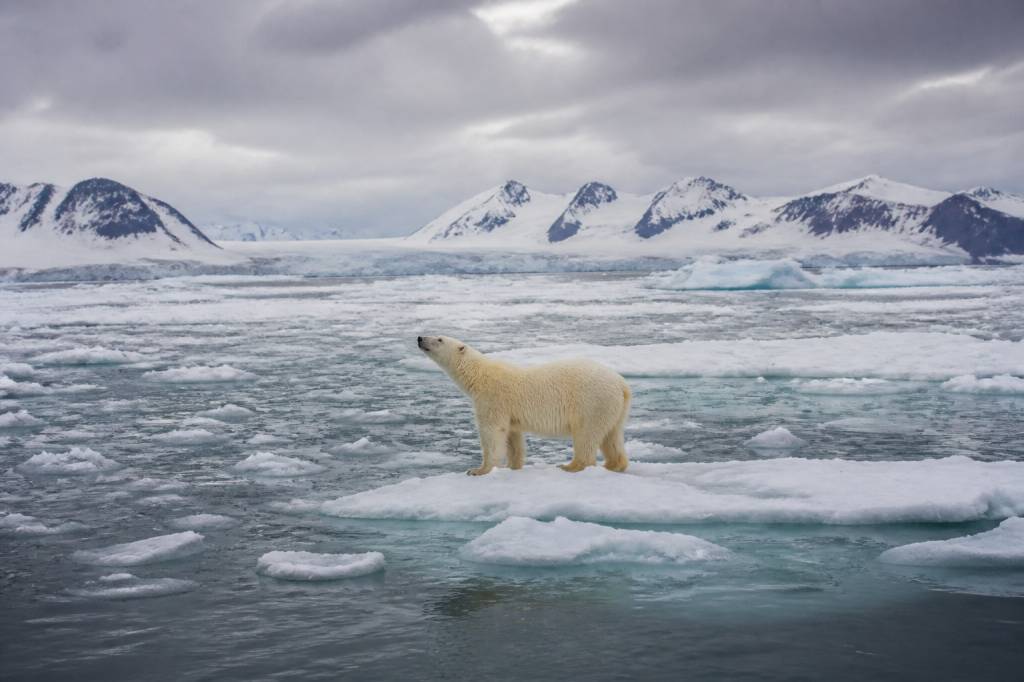
A classic example is coral bleaching. When water temperatures rise, corals expel the symbiotic algae that help feed them and give them color. If the stress persists, reefs can die. This affects not only marine biodiversity, but also fisheries, tourism, and coastal protection. Another example is alpine or polar species that have nowhere colder to go. For them, climate change is not a distant forecast; it is a narrowing corridor.
The relationship is circular: ecological degradation increases climate vulnerability, and climate change accelerates ecological degradation. Breaking that cycle is one of the central challenges of our time.
How ecological decline threatens sustainable development
Sustainable development depends on meeting human needs without undermining the natural systems that make those needs possible. That sounds straightforward until we look at the scale of current pressures. Food security, water access, clean energy, economic stability, and social equity all depend on functioning ecosystems.
Consider agriculture. Healthy soils, pollinators, water regulation, and natural pest control are all ecological services. If soils are depleted and biodiversity is reduced, farmers may become more dependent on synthetic inputs, more exposed to crop failure, and more vulnerable to price shocks. This is especially serious in regions where smallholder agriculture supports millions of people.
Water is another clear example. Forested watersheds help regulate water quality and flow. Wetlands filter pollutants and reduce flood peaks. When these systems are damaged, cities and rural areas alike may face higher treatment costs, worse drought impacts, and greater disaster risk. Sustainable development cannot be built on unstable water foundations. That tends to end badly, and usually expensively.
Ecological issues also shape livelihoods and public health. Communities that rely on fisheries, forestry, ecotourism, or subsistence farming are often the first to feel ecosystem decline. Meanwhile, degraded environments can increase exposure to disease vectors, air pollution, and heat stress. In other words, ecosystem health and human health are deeply intertwined, whether policy documents acknowledge it or not.
Local examples with global significance
Ecological crises often begin at the local level, but their implications are global. A drained peatland in one region can contribute to atmospheric carbon emissions far beyond its borders. A collapsing fish stock in one sea can affect international food markets. A tropical forest cleared for short-term gain can reduce biodiversity, alter rainfall, and release carbon that influences the climate system worldwide.
Some of the most instructive examples come from restoration efforts. When mangroves are replanted, shorelines gain protection from storm surges, fish nurseries recover, and carbon storage increases. When rivers are reconnected to floodplains, biodiversity rebounds and water retention improves. When native grasses are restored in degraded landscapes, soil health improves, pollinators return, and erosion declines.
These are not romantic gestures. They are measurable interventions with practical benefits. Nature-based solutions work best when they are designed with ecological realism, local knowledge, and long-term monitoring. Planting trees, for instance, is not automatically restoration. Wrong species, wrong place, wrong hydrology, wrong outcome. Ecology rewards patience and punishes shortcuts.
What makes ecological issues so difficult to solve
Part of the challenge is that ecological damage is cumulative. A single disturbance may be survivable, but repeated stress pushes ecosystems past thresholds. These thresholds are not always obvious. A lake can slowly shift from clear to algae-dominated. A forest can become less diverse before it becomes visibly degraded. By the time the change is obvious to everyone, recovery may be much harder.
Another difficulty is scale. Ecological processes operate across time and space in ways that do not fit neatly into political or economic boundaries. Rivers cross borders. Migratory species depend on habitats in several countries. Climate impacts unfold over decades, while policy cycles are often much shorter. Ecosystems are playing the long game; institutions often are not.
There is also the issue of trade-offs. Infrastructure, mining, industrial agriculture, and urban expansion can deliver short-term benefits while generating long-term ecological costs. The question is not whether development should happen. It is whether it can happen within ecological limits. The answer is yes, but only if those limits are recognized early and treated as non-negotiable rather than inconvenient.
Paths forward: from damage control to ecological resilience
The most effective responses to ecological issues combine protection, restoration, and prevention. Protecting intact ecosystems is usually cheaper and more effective than trying to rebuild them later. Restoring damaged habitats can bring substantial benefits, but it works best when it supports natural processes rather than overriding them. Preventing further degradation remains the most efficient strategy of all, even if it lacks the dramatic appeal of a major rescue mission.
Useful priorities include:
- Expanding protected areas and improving ecological connectivity
- Restoring degraded forests, wetlands, rivers, and coastal systems
- Reducing pollution at the source, especially nutrient and chemical runoff
- Supporting sustainable agriculture, forestry, and fisheries
- Integrating biodiversity into climate policy and land-use planning
- Strengthening ecological monitoring and long-term research
- Recognizing Indigenous and local stewardship as central to conservation outcomes
One especially important shift is moving away from viewing nature as separate from development. Healthy ecosystems are infrastructure. They are not decorative extras. They are the living systems that make cities livable, farms productive, and climate adaptation possible. Once that perspective changes, policy choices start to look different.
Education and public engagement also matter. People are more likely to support conservation when they understand the link between ecology and daily life. That link can be direct—clean water, pollination, flood protection—or more subtle, such as the stability that diverse ecosystems bring to food systems and climate regulation. Either way, ecology is not an abstract luxury. It is the operating system of the planet.
Reading the signals before the system speaks louder
Ecological issues are not isolated environmental inconveniences. They are early warnings about the state of the systems that sustain biodiversity, regulate climate, and make sustainable development possible. When species vanish, habitats fragment, or ecosystems lose resilience, the consequences reach far beyond the natural world.
The encouraging part is that ecological decline is not always irreversible. In many cases, nature responds quickly when pressure is reduced and conditions improve. Birds return to restored wetlands. Fish recolonize protected reefs. Soils regain structure. Forests begin to recover their function. The living world has a remarkable capacity for renewal, provided we stop pushing it past its limits.
That is the real challenge and the real opportunity: to move from reactive conservation to proactive stewardship, from managing decline to building resilience. The more we understand ecological issues in their full context, the better equipped we are to protect biodiversity, slow climate change, and pursue development that lasts. Which, in the end, is not just an environmental goal. It is a practical one.