Why ecology belongs at the heart of sustainable development
When people talk about sustainable development, the conversation often drifts quickly toward energy, transport, or waste. All important topics, of course. But beneath each of them lies a more fundamental question: how do human systems fit within the living systems that support them? That is where ecology enters the picture.
Ecology is the science of relationships. It studies how organisms interact with one another and with their environment, from soil microbes to top predators, from wetlands to forests, from urban gardens to coral reefs. Sustainable development, meanwhile, is the effort to meet human needs without undermining the ability of future generations to meet theirs. The two are inseparable. A development model that ignores ecosystems is not sustainable; it is merely borrowing from nature with interest.
The logic is simple. Clean water depends on functioning watersheds. Fertile soils depend on living communities of fungi, bacteria, and invertebrates. Pollination depends on insects and other animals. Climate stability depends, in part, on forests, oceans, wetlands, and grasslands that store carbon. If ecosystems weaken, so does every sector that depends on them. And that includes food security, public health, infrastructure, and local economies.
Ecosystems are not scenery; they are infrastructure
One of the most useful shifts in environmental thinking is to stop viewing nature as a backdrop. Ecosystems are not decorative. They are working systems that provide what scientists call ecosystem services, although the term can sound a little sterile for something so vital. A wetland filtering water, a mangrove buffering storm surges, or a prairie supporting pollinators is not “nice to have.” It is infrastructure, just built by evolution rather than engineers.
Consider mangroves. In many coastal regions, these forests reduce wave energy, trap sediment, and protect shorelines from erosion. They also serve as nurseries for fish and crustaceans. Remove them, and you do not just lose trees. You destabilize fisheries, expose communities to stronger storm damage, and reduce biodiversity at the same time. Nature rarely offers single-purpose solutions; ecosystems usually deliver several benefits at once, which is precisely why they matter so much for sustainable development.
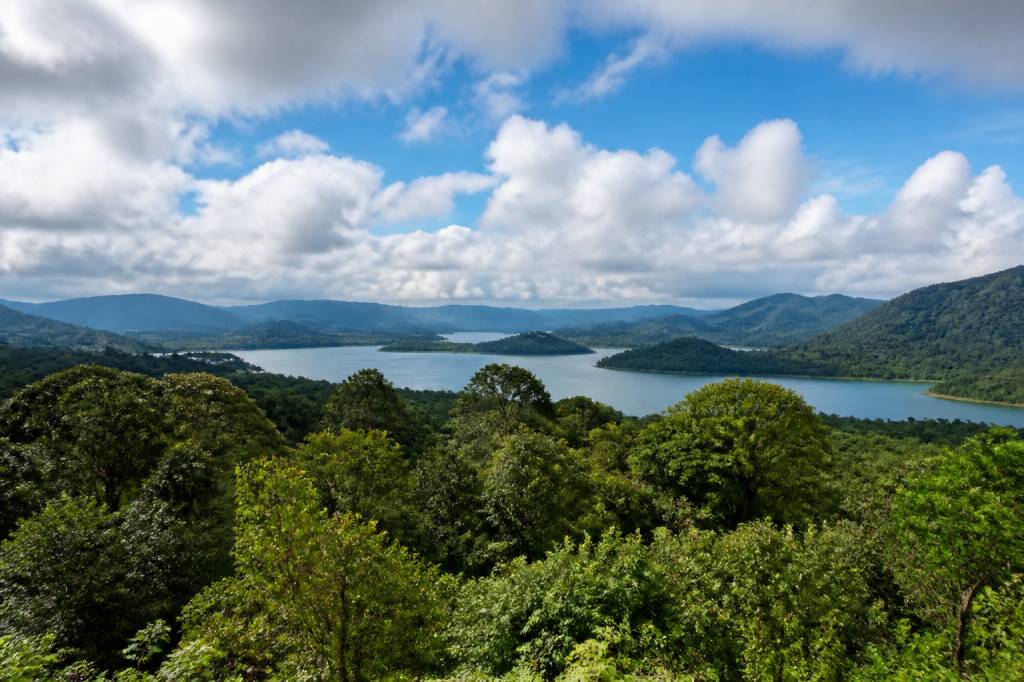
Forest ecosystems work in a similarly layered way. They regulate local climate by influencing humidity and temperature, cycle nutrients through leaf litter and decomposers, and store large amounts of carbon in biomass and soils. In tropical regions, intact forests often support both high biodiversity and livelihoods through non-timber forest products, agroforestry, and ecotourism. Again, the same living system supports ecology and economy together when managed carefully.
The challenge is that these services are easy to overlook until they are gone. We notice wetlands when floodwaters rise, pollinators when crops fail, and healthy soils when yields decline. By then, recovery is possible, but expensive. Prevention is almost always cheaper than repair, which is perhaps one of ecology’s least glamorous but most important lessons.
Biodiversity: the quiet engine of resilience
Biodiversity is more than the number of species in a region. It includes genetic diversity within species, diversity among species, and diversity of ecosystems across landscapes. This variety matters because complex systems are more resilient than simplified ones. A field with one crop is efficient in the short term. A landscape with diverse habitats is usually more stable over time. Nature, unlike some spreadsheets, does not reward maximum simplification.
Why does biodiversity improve resilience? Because different species respond differently to disturbance. If a drought affects one plant species, others may still survive and maintain ecosystem functions. If one pollinator declines, another may partly compensate. If one predator disappears, another may keep herbivore populations in check. This redundancy is not wasteful; it is insurance.
Take coral reefs as an example. Healthy reefs contain a rich mix of corals, fish, algae, and invertebrates. This diversity supports food webs and helps the ecosystem recover after storms or bleaching events. When reefs become degraded and species-poor, they lose that buffering capacity. Recovery slows, algal overgrowth increases, and the system can shift into a less productive state. In ecological terms, the range of possible responses narrows.
Biodiversity also stabilizes productivity. In grasslands and forests, diverse plant communities often use light, water, and nutrients more efficiently because species occupy slightly different niches. Some root deeply, others shallowly; some grow early in the season, others later. Together they can maintain ecosystem function under variable conditions. This is one reason ecological restoration increasingly emphasizes native diversity rather than single-species planting.
There is also a human dimension. Biodiversity supports nutrition, medicine, cultural identity, and livelihoods. Wild foods, medicinal plants, and fisheries are not peripheral for millions of people; they are central. Protecting biodiversity is therefore not only about saving rare species, although that matters deeply. It is also about keeping the living systems that make human life adaptable and secure.
Climate resilience starts with healthy ecosystems
Climate resilience is often discussed in terms of adaptation infrastructure: seawalls, drought-resistant crops, emergency plans, and heat-action protocols. These are essential. But ecosystems themselves are among the most effective forms of adaptation we have. Healthy ecosystems absorb shocks, moderate extremes, and recover from disturbance more effectively than degraded ones.
Forests, for example, help regulate water cycles by intercepting rainfall, increasing infiltration, and reducing runoff. In catchments with intact vegetation, soils tend to retain more moisture and rivers often flow more steadily through dry periods. This can reduce both flood peaks and drought stress. Restoring riparian vegetation along streams can also cool water temperatures, which matters for aquatic biodiversity and water quality.
Wetlands are especially valuable in a changing climate. They store water during heavy rainfall and release it slowly during dry periods. They also sequester carbon, particularly in peatlands, which store enormous amounts of organic matter in waterlogged soils. When drained, these systems can become major carbon sources. Protecting them is therefore both a climate mitigation and adaptation strategy.
Coastal ecosystems deserve equal attention. Mangroves, salt marshes, and seagrass meadows reduce storm impacts while supporting fisheries and storing carbon. In many places, a “gray” solution such as concrete barriers is not enough on its own. Nature-based solutions can complement engineering, often with lower maintenance costs and co-benefits for wildlife. The key is not to treat nature as a luxury add-on, but as part of the design itself.
There is a practical lesson here: resilience is not just about bouncing back after a shock. It is about retaining function while conditions change. Ecosystems with intact structure and diversity are better at doing exactly that. In other words, conservation is not separate from adaptation. It is one of its foundations.
The hidden links between soil, water, and human well-being
Ecology often becomes easiest to appreciate at eye level: birds, trees, reefs, mammals. Yet some of the most decisive processes happen below our feet. Soil is alive. It contains bacteria, fungi, nematodes, insects, roots, organic matter, and a dense network of interactions that control nutrient cycling and water retention. Healthy soil is not dirt; it is a living archive of ecological relationships.
In sustainable agriculture, soil health is everything. Degraded soils lose structure, erode more easily, hold less water, and require more external inputs to remain productive. By contrast, soils rich in organic matter can better withstand drought, support crop growth, and reduce fertilizer runoff. Cover crops, reduced tillage, compost additions, agroforestry, and diversified rotations all help rebuild that living foundation.
Water and soil are tightly connected. When land is deforested or overgrazed, rainfall runs off more quickly, carrying sediment and pollutants into rivers and reservoirs. Downstream, this affects drinking water, hydroelectric systems, fisheries, and coastal ecosystems. Protecting upstream landscapes is therefore an ecological and economic strategy, not an abstract environmental preference.
This interconnectedness is easy to miss because the impacts are spread across space and time. A land-use decision made in one watershed may affect a city’s water supply years later. A pesticide applied in one field may alter pollinator communities over a broader landscape. Ecology is full of such delayed feedbacks, which is one reason sound management must be precautionary rather than reactive.
From protection to restoration: what sustainable development looks like in practice
Sustainable development is not achieved by a single policy, nor by a green label on an otherwise unchanged system. It requires a shift in how land, water, and resources are managed. In practice, that means protecting intact ecosystems, restoring degraded ones, and designing development projects that work with ecological processes instead of against them.
Some of the most effective approaches are surprisingly straightforward:
- Protect high-biodiversity areas and ecological corridors so species can move in response to climate shifts.
- Restore wetlands, forests, and coastal habitats to improve flood control, carbon storage, and habitat quality.
- Support regenerative agriculture that rebuilds soil health and reduces chemical dependence.
- Plan cities with green spaces, tree cover, permeable surfaces, and habitat patches that reduce heat and support wildlife.
- Use environmental impact assessments that consider cumulative effects, not just isolated projects.
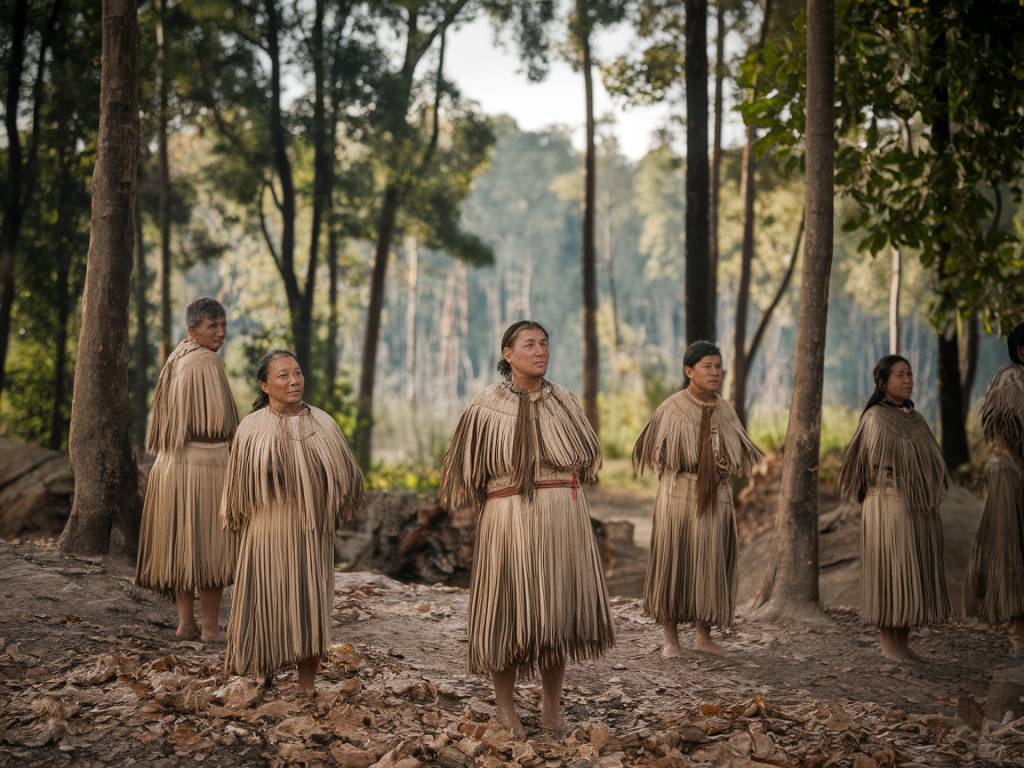
- Integrate local and Indigenous knowledge with scientific monitoring, especially in long-managed landscapes.
Restoration deserves special attention. It is tempting to imagine that conservation means only fencing off pristine places. In reality, many ecosystems have already been altered and still need active repair. Replanting native vegetation, reconnecting rivers to floodplains, removing invasive species, or reintroducing ecological disturbances such as controlled burning can help recover function. Successful restoration is not about making landscapes look untouched. It is about bringing back ecological processes.
There is also a social dimension. Sustainable development works best when communities benefit directly from ecosystem stewardship. Payments for ecosystem services, community forestry, sustainable fisheries management, and locally governed conservation areas can align ecological protection with livelihoods. When people see a direct link between healthy ecosystems and their own future, stewardship becomes far more durable.
Why biodiversity loss makes climate action harder
It is easy to treat climate change and biodiversity loss as separate crises. They are often managed by different agencies, funded through different programs, and discussed in different rooms. Ecologically, however, they are intertwined. Climate change accelerates habitat shifts, species range contractions, coral bleaching, and pest outbreaks. Biodiversity loss, in turn, weakens the ecosystems that store carbon and buffer climate impacts.
A degraded forest stores less carbon than a healthy one and may become more vulnerable to fire, insects, and drought. A simplified agricultural landscape is less resistant to extreme weather and more dependent on fertilizers, irrigation, and pest control. A stressed coastal wetland may lose its ability to defend shorelines. Each loss reduces resilience, creating a feedback loop that makes climate adaptation more difficult.
This is why climate policy that overlooks ecology is incomplete. Emissions reductions remain essential, but they should be paired with ecosystem protection and restoration. If we want landscapes that can absorb shocks and support life under changing conditions, we must maintain the diversity and integrity that make those landscapes function in the first place.
There is a useful phrase in ecology: “the whole is more than the sum of its parts.” In climate policy, that means a healthy ecosystem can deliver benefits greater than any single intervention. A restored floodplain can store carbon, protect downstream communities, filter water, and support wildlife. That is not an accidental bonus. It is how living systems work.
What readers, communities, and decision-makers can do
It is easy to feel that ecology and sustainable development are matters for governments, scientists, or large institutions only. They are not. The scale of the challenge is large, but action happens across many levels. Every landscape is managed by someone, and every consumer choice sends a signal, however imperfect, through supply chains and local economies.
Individuals can support local biodiversity by choosing native plants, reducing chemical use in gardens, supporting habitat-friendly food systems, and advocating for green urban planning. Communities can push for river restoration, tree canopy expansion, wetland protection, and school programs that connect children to local ecology. Businesses can map ecological risks in supply chains and invest in nature-positive practices. Policymakers can protect ecological thresholds before they are crossed.
Perhaps the most important shift is conceptual. Sustainability should not mean doing less harm while keeping the same basic model. It should mean designing societies that function within ecological limits and even help regenerate them. That is a higher standard, but also a more realistic one in a world of climate stress and biodiversity decline.
The living world already offers the blueprint. Diverse systems are more resilient. Connected systems are more adaptive. Healthy soils, wetlands, forests, and oceans make human development more secure, not less. If sustainable development is to live up to its name, it must begin by recognizing a simple ecological truth: we do not stand outside nature, and we never did.