


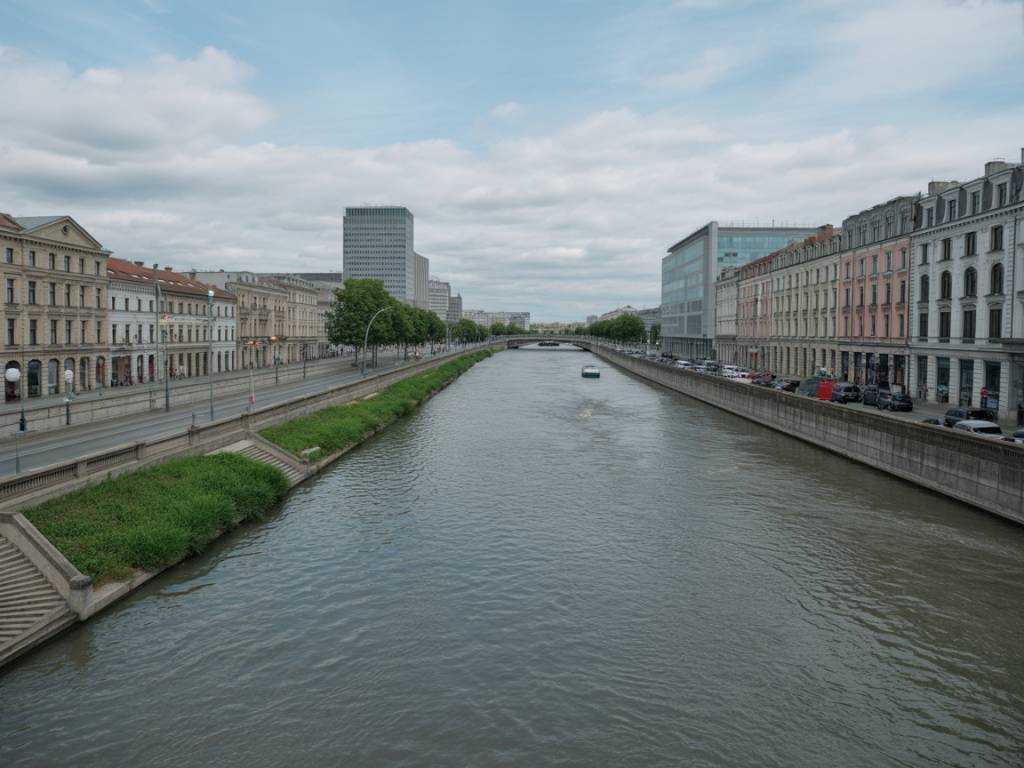
Across the world, cities are rediscovering their rivers. For decades, urban waterways were treated primarily as drainage channels and industrial backyards, constrained by concrete embankments and hidden behind warehouses or highways. As climate change intensifies extreme rainfall and heat, this approach is rapidly becoming obsolete. A new paradigm is emerging: climate-smart restoration of urban rivers that integrates flood protection, biodiversity recovery, and public health benefits within a single landscape.
From Concrete Channels to Living Rivers
Urban river restoration has traditionally focused on water quality and basic habitat improvements. Today, the scope is broader and more strategic. Cities are increasingly using rivers as multi-functional corridors that store floodwater, support wildlife, cool overheated neighborhoods, and provide accessible green space.
This shift is driven by three converging pressures. First, the rising costs of flood damage are pushing municipalities to move beyond hard-engineering solutions alone. Second, biodiversity loss is eroding ecosystem services that cities depend on, from natural flood retention to pollination. Third, growing awareness of environmental health links is highlighting how degraded rivers affect respiratory diseases, mental health, and social inequality.
In this context, climate-smart river restoration is not simply about beautifying riverbanks. It is about rethinking the role of urban rivers as core infrastructure for climate resilience and public well-being.
Why Urban Rivers Matter in a Warming World
As climate impacts intensify, the strategic value of urban rivers becomes more evident. These waterways and their floodplains can:
- Store and slowly release stormwater, reducing peak flows and flood risk downstream.
- Create ecological corridors that allow species to move and adapt as temperatures rise.
- Moderate urban heat islands by adding vegetation and open water surfaces.
- Support recreation, social cohesion, and nature contact in dense neighborhoods.
However, in many cities, rivers are still encased in concrete, disconnected from their floodplains, and bordered by impermeable surfaces. These modifications amplify flash flooding, degrade water quality, and limit habitats. As climate models project more intense downpours and longer dry spells, the limitations of this legacy infrastructure are becoming critical.
Integrating Flood Protection with Natural Processes
Climate-smart restoration of urban rivers starts with a fundamental design question: how can flood protection work with, rather than against, natural processes? The answer typically involves a suite of nature-based solutions that complement or partially replace traditional gray infrastructure.
Key strategies include:
- Floodplain reconnection: Lowering or setting back levees and removing embankments to allow rivers to spill onto designated areas during high flows, thereby reducing downstream flood peaks.
- Riverbed re-naturalization: Replacing concrete channels with more natural river profiles, pools, riffles, and meanders to slow water, store sediment, and create diverse flow conditions.
- Riparian buffer restoration: Planting native trees and shrubs along riverbanks to stabilize soils, enhance infiltration, and intercept runoff before it reaches the river.
- Distributed green infrastructure: Integrating rain gardens, bioswales, permeable pavements, and green roofs across the catchment to reduce the volume and speed of stormwater entering the river system.
These techniques do not eliminate the need for engineered structures. Instead, they create hybrid systems where levees, culverts, and retention basins are complemented by wetlands, floodplains, and vegetated corridors. This combination increases redundancy, providing multiple lines of defense against more extreme events.
Biodiversity as a Core Design Objective
Historically, biodiversity was often an afterthought in urban flood management projects. In climate-smart river restoration, it is increasingly treated as core infrastructure. Diverse ecosystems, from riparian woodlands to urban wetlands, contribute directly to climate resilience.
Restored urban rivers can host a surprising array of species, even in highly built-up areas. Re-meandering channels, adding woody debris, and creating shallow margins all improve habitat complexity. Native aquatic plants filter pollutants, while fish and invertebrates help maintain ecological balance. Birds and pollinating insects use riparian corridors as migration routes and feeding grounds.
To maximize ecological benefits, planners are turning to concepts such as:
- Habitat mosaics: Designing a mix of wetland patches, reed beds, gravel bars, and shaded pools to support different species and life stages.
- Connectivity: Ensuring that river restoration projects link with parks, greenways, and upstream natural areas to create larger ecological networks.
- Native species prioritization: Using local plant communities adapted to regional climate conditions, which enhances resilience to heat and drought.
- Adaptive management: Monitoring species responses and adjusting management practices, such as mowing regimes or invasive species control, over time.
By explicitly embedding biodiversity goals in urban river restoration, cities are not only conserving nature but also reinforcing the ecological functions that underlie flood resilience and water quality improvement.
Public Health, Equity, and Climate-Smart River Corridors
The health benefits of well-designed urban blue-green spaces are increasingly documented. Contact with rivers, trees, and wetlands can lower stress, encourage physical activity, and improve mental well-being. In neighborhoods with limited access to parks, a restored river corridor may be one of the few accessible natural spaces.
Climate-smart restoration projects contribute to public health in several ways:
- Improving air quality: Riparian vegetation captures particulate matter and helps buffer communities from traffic emissions.
- Reducing heat stress: Shaded riverbanks and evaporative cooling from surface water can lower local temperatures by several degrees during heatwaves.
- Enhancing mental health: Regular exposure to water and green space is correlated with reduced anxiety and depression.
- Supporting active lifestyles: Well-designed riverfront paths promote walking, cycling, and informal recreation.
However, not all communities benefit equally. In many cities, marginalized neighborhoods are located in low-lying, flood-prone areas near degraded rivers. Climate-smart river restoration, if not carefully planned, can inadvertently drive up property values and contribute to “green gentrification,” displacing precisely those residents who have endured decades of environmental burdens.
Addressing this tension requires integrating social equity into river planning from the outset. This may involve:
- Ensuring affordable housing protections in areas slated for major green and blue infrastructure investments.
- Designing riverfront amenities through participatory processes that reflect local cultural and recreational priorities.
- Targeting restoration first in underserved communities with the highest flood and health vulnerabilities.
Governance and Community Involvement
Implementing climate-smart restoration of urban rivers is rarely a purely technical challenge. It is fundamentally a governance issue, requiring coordination between water utilities, planning departments, health agencies, transport authorities, and local residents. Fragmented responsibilities can slow or derail projects, especially when short-term budgets compete with longer-term resilience goals.
Effective governance models often share several characteristics:
- Integrated catchment planning: Viewing the river and its tributaries as a single system that cuts across municipal boundaries and sectoral mandates.
- Cross-sectoral funding: Pooling budgets from flood control, public health, climate adaptation, and transport to support multi-functional projects.
- Community co-design: Involving local stakeholders in shaping project priorities, monitoring outcomes, and stewarding restored areas.
- Transparent data: Making hydrological and environmental information publicly accessible to build trust and support shared decision-making.
Citizen science initiatives, such as community water quality monitoring or biodiversity surveys along restored riverbanks, can strengthen this governance framework. They provide local data, foster a sense of ownership, and help align restoration outcomes with community expectations.
Examples from Cities Pioneering Climate-Smart River Restoration
While each city faces distinct hydrological, social, and political contexts, several international examples illustrate how climate-smart river restoration can be implemented in practice.
In Seoul, South Korea, the removal of an elevated highway and the restoration of the Cheonggyecheon stream has become a landmark project. The restored waterway now provides flood storage capacity, moderates local temperatures, and supports fish and bird species in the heart of the city. It also offers accessible public space, though ongoing debates highlight the need to balance tourism pressures with local needs.
In Germany, the city of Hamburg has been experimenting with flood-resilient waterfronts along the Elbe and its canals, integrating higher ground-floor elevations, green embankments, and multi-use public plazas that can temporarily store water. These designs acknowledge that flooding cannot be completely prevented and must instead be accommodated safely.
In North America, cities such as Portland and Philadelphia are linking urban river restoration with extensive green infrastructure programs. By disconnecting downspouts, installing rain gardens, and daylighting buried streams, these cities are reducing combined sewer overflows and improving the ecological condition of their rivers and creeks, while also building climate resilience.
In Latin America, Medellín’s “green corridors” and riverbank regeneration initiatives show how temperature reduction, biodiversity enhancement, and public transport integration can be combined. Vegetated riverfronts and shaded pathways are helping to cool the city and improve connectivity for both people and wildlife.
These projects demonstrate that climate-smart river management is highly context-specific but guided by shared principles: restore natural processes where possible, design for multiple benefits, and embed equity and public participation in every stage.
Measuring Success in a Climate-Smart Framework
To evaluate whether urban river restoration is truly climate-smart, cities are adopting broader performance metrics. Traditional indicators such as flood return periods and water quality standards remain important. But they are increasingly supplemented by measures of ecological and social performance, including:
- Hectares of reconnected floodplain and additional water storage capacity.
- Trends in native species richness and presence of indicator species for habitat quality.
- Reductions in urban heat island intensity in neighborhoods adjacent to restored rivers.
- Changes in physical activity levels and self-reported well-being of residents using riverfront spaces.
- Distribution of benefits and burdens across socio-economic groups, assessed through equity-focused indicators.
By tracking this wider set of indicators, city planners and water managers can better understand trade-offs, document co-benefits, and refine interventions over time. This iterative approach is essential in an era of climate uncertainty.
Urban Rivers as Climate Resilience Backbones
As cities adapt to a changing climate, urban rivers are evolving from overlooked backwaters into strategic assets. Climate-smart restoration invites a holistic view: rivers as dynamic systems that can protect communities from floods, shelter biodiversity, and enhance public health if given space and ecological function.
Achieving this vision requires sustained political will, cross-sector collaboration, and long-term investment. It also demands attention to justice, ensuring that river-based climate resilience does not exacerbate existing inequalities. When these conditions are met, restored urban rivers can become the backbone of green and blue infrastructure networks, supporting both ecological and social resilience in an increasingly uncertain climate future.