
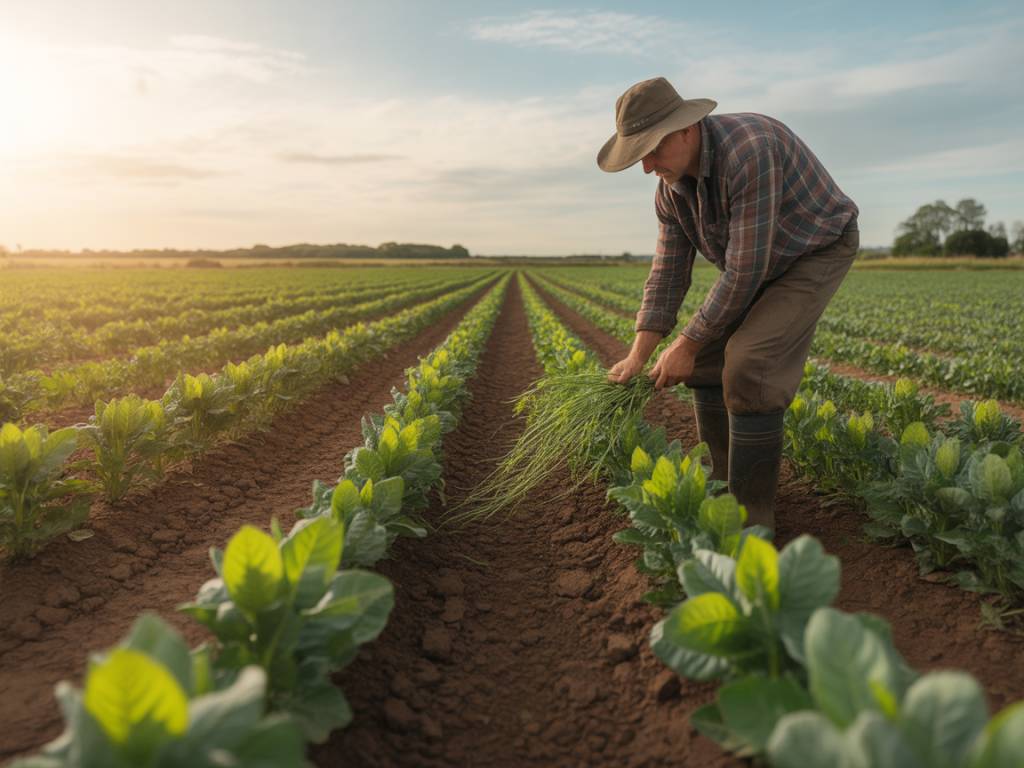
Around the world, farmers, scientists and environmental organizations are converging on the same idea: to stabilize the climate, we must start with the soil. Regenerative agriculture is emerging as a promising answer, capable of restoring degraded soils, increasing biodiversity and sequestering carbon. Far from being a niche concept, it is increasingly seen as a cornerstone of future food systems and climate strategies.
What is regenerative agriculture?
Regenerative agriculture is a holistic approach to farming that seeks not only to reduce environmental harm, but to actively improve the health of ecosystems. Rather than focusing solely on yields or input efficiency, it aims to regenerate soil fertility, increase biodiversity, improve water cycles and strengthen resilience to climate extremes.
While definitions vary, most regenerative agriculture systems share several core principles:
- Keeping the soil covered year-round
- Minimizing soil disturbance
- Maintaining living roots in the ground as long as possible
- Increasing plant and species diversity
- Integrating trees and livestock where appropriate
- Reducing or eliminating synthetic fertilizers and pesticides over time
These practices are not entirely new. Many Indigenous and traditional farming systems around the world have long relied on similar approaches. Regenerative agriculture brings them together under a shared framework, reinforced by modern soil science and climate research.
Why soils are central to climate stability
Soils are one of the planet’s largest carbon reservoirs. Globally, they store more carbon than the atmosphere and all vegetation combined. When soils are disturbed, eroded or depleted of organic matter, much of that carbon is released as carbon dioxide, contributing to climate change. Conversely, healthy soils rich in organic matter act as powerful carbon sinks.
Industrial agriculture has contributed significantly to soil degradation. Intensive ploughing, monocultures and heavy use of synthetic fertilizers have lowered soil organic carbon in many regions. The loss of soil structure and biology also leaves fields more vulnerable to droughts and floods, both of which are becoming more frequent under climate change.
Regenerative agriculture seeks to reverse this trend by increasing soil organic matter, rebuilding soil structure and restoring the complex web of microorganisms that drive nutrient cycling. As soil health improves, so does its capacity to store carbon and buffer climate extremes.
Key regenerative agriculture practices that restore soils
Behind the broad concept of regenerative agriculture stand concrete, field-level practices. Combined and adapted to local conditions, they can transform depleted land into resilient, living soil.
Cover crops and permanent ground cover
One of the most effective tools in regenerative agriculture is the use of cover crops: plants grown not for harvest but to protect and nourish the soil. Instead of leaving fields bare between cash crops, farmers sow mixtures of legumes, grasses and flowering plants.
Cover crops help soil and climate in several ways:
- They protect the soil surface from erosion by wind and rain.
- Their roots add organic matter below ground, increasing soil carbon.
- Legume species fix atmospheric nitrogen, reducing the need for synthetic fertilizers.
- They improve soil structure, porosity and water infiltration, making fields more drought-resilient.
- Flowers provide habitat and food for pollinators and beneficial insects.
By maintaining a living cover, farmers mimic natural ecosystems, where bare soil is rare. The result is a gradual rebuilding of soil organic matter and a more stable carbon sink.
Reduced tillage and no-till systems
Traditional ploughing inverts and churns the soil, exposing organic matter to oxygen and accelerating its decomposition. Over time, this process depletes carbon stocks and disrupts soil organisms such as earthworms, fungi and bacteria.
Regenerative agriculture promotes reduced tillage or no-till systems, in which seeds are directly sown into minimally disturbed soil. Crop residues and cover crop biomass are left on the surface rather than being ploughed under.
This approach offers multiple benefits:
- Less soil disturbance means slower decomposition of organic matter and greater carbon retention.
- Soil structure and aggregates remain intact, improving water holding capacity.
- Microbial and fungal networks remain connected, enhancing nutrient cycling.
- Fuel use declines because heavy tillage operations are reduced or eliminated.
No-till systems are not automatically regenerative; they can still rely heavily on herbicides if not managed carefully. However, when combined with cover crops, crop rotations and reduced chemical inputs, they become a powerful tool for soil regeneration and carbon sequestration.
Diverse crop rotations and polycultures
Monoculture, the repeated planting of the same crop on the same field, is a hallmark of industrial agriculture. It simplifies management but leaves soil vulnerable to pests, diseases and nutrient imbalances.
Regenerative agriculture promotes diverse crop rotations and, where possible, polycultures (multiple species grown together). Rotations break pest and disease cycles and support a wider range of soil organisms. Deep-rooted crops, for example, can access nutrients and moisture beyond the reach of shallow-rooted plants, while legumes enrich the soil with nitrogen.
Diversity above ground translates into diversity below ground. A variety of root exudates feeds different microbial communities, making the soil food web more complex and resilient. This complexity is closely linked to the soil’s ability to store carbon stably over the long term.
Integrating trees: agroforestry and silvopasture
Agroforestry combines trees with crops or livestock on the same land. Silvopasture, a specific form of agroforestry, integrates trees with grazing animals. Both systems are central to many regenerative agriculture strategies.
Trees contribute to soil and climate benefits by:
- Adding large amounts of biomass above and below ground.
- Stabilizing soil with their root systems, reducing erosion.
- Creating microclimates that moderate heat and wind, reducing water stress.
- Providing shade for animals, which can improve animal welfare and pasture productivity.
Above all, trees are long-term carbon reservoirs. By incorporating them into farmland, agroforestry transforms open fields into carbon-rich landscapes, all while producing timber, fruit, fodder or other products that can diversify farmers’ incomes.
Managed grazing and grassland regeneration
Livestock production is often criticized for its greenhouse gas emissions, particularly methane. Yet grazing animals, if managed carefully, can also play a role in regenerating grasslands and storing carbon in soils.
Regenerative grazing, sometimes called holistic or rotational grazing, involves moving animals frequently between small paddocks. This mimics the natural movement of wild herbivores, preventing overgrazing and allowing grasses time to recover.
Well-managed grazing can:
- Stimulate root growth and tillering in grasses, increasing below-ground biomass.
- Encourage the buildup of organic matter from manure and trampling of plant residues into the soil surface.
- Promote plant species diversity, especially when rest periods are carefully planned.
When combined with reduced reliance on feed crops and better manure management, regenerative grazing can improve soil health while reducing the overall climate footprint of livestock systems.
How regenerative agriculture sequesters carbon
At the heart of regenerative agriculture’s climate promise lies carbon sequestration: the process by which plants capture atmospheric carbon dioxide through photosynthesis and transfer it into the soil as organic carbon.
The main mechanisms include:
- Increased plant biomass, both above and below ground, as more diverse and continuous vegetation covers the land.
- Enhanced root exudation, where living roots release sugars and organic compounds that feed soil microbes and contribute to stable soil carbon.
- Formation of soil aggregates, in which carbon becomes physically protected from rapid decomposition.
- Greater input of organic residues from cover crops, crop residues, manure and tree litter.
Scientific estimates of the total sequestration potential of regenerative agriculture vary widely, reflecting differences in climate, soil type, baseline conditions and specific practices. However, numerous field studies show that well-managed regenerative systems can increase soil organic carbon over time, sometimes reversing decades of depletion.
Additional benefits for biodiversity and water
Although climate mitigation attracts much of the attention, the benefits of regenerative agriculture extend far beyond carbon. By rebuilding soils and diversifying landscapes, regenerative systems create habitats for a wide range of organisms.
On farms shifting to regenerative management, researchers often report:
- Higher levels of soil biodiversity, from microbes to earthworms.
- Increased presence of pollinators such as bees and butterflies.
- Greater abundance of birds, particularly insectivorous and farmland species.
Water management also improves. Healthier soils with more organic matter can absorb and retain more water, reducing runoff, erosion and flood risks. During dry periods, this stored moisture becomes a lifeline for crops, buffering farms against drought.
Challenges and limits of regenerative agriculture
While regenerative agriculture holds significant promise for restoring soils and stabilizing the climate, it is not a simple fix. Transitioning from conventional systems requires knowledge, time and often financial support.
Farmers may face several obstacles:
- Initial yield fluctuations during the transition period.
- Costs of new equipment or infrastructure, such as seed drills for no-till or fencing for rotational grazing.
- Limited access to technical advice and peer-to-peer learning networks.
- Market pressures that reward short-term yields rather than long-term soil health.
Moreover, regenerative practices must be tailored to local conditions. What works in a temperate grain belt may not be appropriate in tropical smallholder systems or semi-arid rangelands. Without careful adaptation, the label “regenerative” risks being applied superficially, with limited real benefits.
Despite these challenges, interest is growing. Governments, food companies and financial institutions are beginning to support regenerative initiatives, seeing them as a way to meet climate targets, secure supply chains and respond to rising consumer demand for sustainable products.
A soil-centered pathway for climate action
As the climate crisis deepens, pressure is mounting to deploy solutions that can deliver rapid, measurable impacts. Regenerative agriculture does not replace the need to reduce fossil fuel use, but it adds a crucial dimension: drawing carbon down into living soils while rebuilding the foundations of food production.
By prioritizing soil health, encouraging biodiversity and valuing the knowledge of farmers and local communities, regenerative agriculture offers a pathway where agriculture becomes a climate ally rather than a climate threat. The fields that feed us can also help stabilize the atmosphere, if the living world beneath our feet is given the attention and care it deserves.