


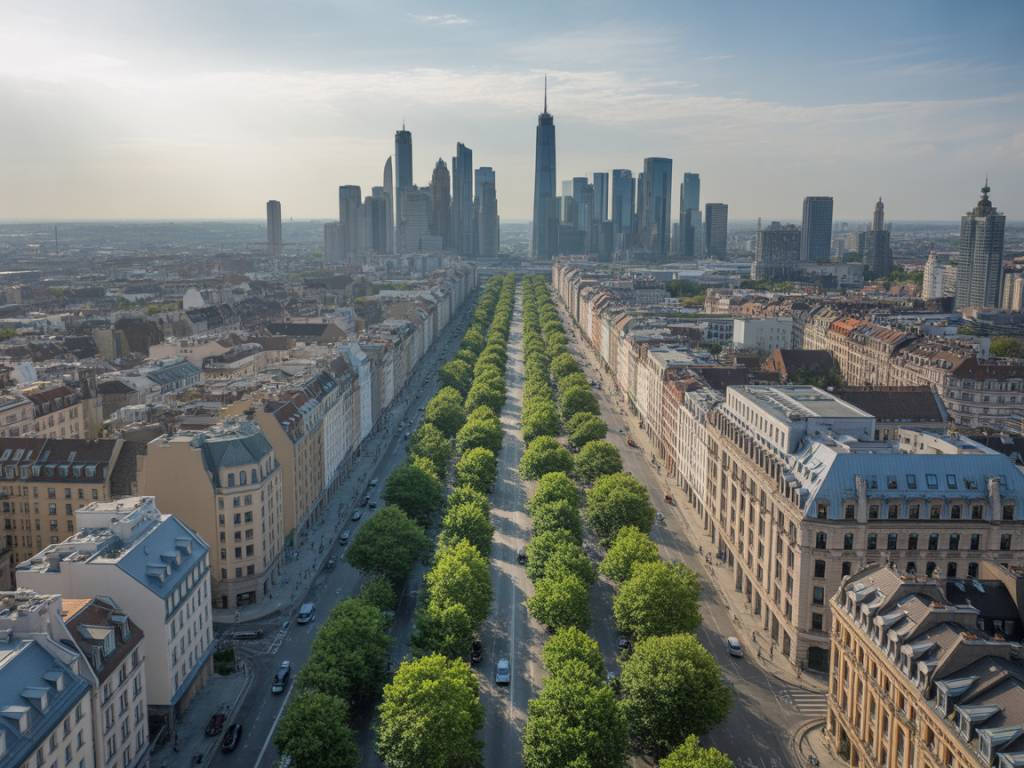
As cities around the world grapple with rising temperatures, more intense heatwaves and accelerating biodiversity loss, urban planners are increasingly turning to nature-based solutions. Among these, urban green corridors stand out as one of the most promising strategies to design climate-adaptive cities that are cooler, more resilient and ecologically connected. By weaving linear green spaces through dense urban fabric, municipalities can simultaneously address urban heat islands, stormwater management, public health and habitat fragmentation.
What Are Urban Green Corridors?
Urban green corridors are continuous or semi-continuous stretches of vegetation that connect parks, waterways, street trees, community gardens, vacant lots and other green spaces. They function like ecological highways, allowing species to move, feed and reproduce across the city, while also providing shade, cooling and recreational opportunities for residents.
These corridors can take many forms, including:
- Tree-lined streets and avenues with generous soil volumes
- Greenways along rivers, canals and restored urban streams
- Linear parks on former railways or industrial land
- Vegetated cycling and walking paths connecting neighbourhoods
- Networks of pocket parks, courtyards and green roofs linked at the district scale
When designed with climate adaptation in mind, green corridors become critical infrastructure. They help cities manage extreme heat, reduce flood risks and foster urban biodiversity, while also supporting the well-being of residents through improved air quality, access to nature and quieter, more pleasant streets.
Urban Heat Islands and the Need for Climate-Adaptive Design
Many cities now experience temperatures several degrees higher than surrounding rural areas, a phenomenon known as the urban heat island effect. Dark surfaces, dense building materials, limited tree cover and waste heat from vehicles and buildings trap and radiate heat, making urban neighbourhoods particularly vulnerable during heatwaves.
Climate projections indicate that hot days and tropical nights will become more frequent and intense, especially in dense urban districts already lacking green infrastructure. Low-income communities often face the highest heat exposure due to limited vegetation, older housing stock and proximity to busy roads or industrial zones. Designing climate-adaptive cities is therefore both an environmental and a social equity issue.
Urban green corridors can significantly reduce local air temperatures through shading and evapotranspiration. Strategically planted trees, shrubs and groundcover cool both the air and surrounding surfaces, lowering building cooling demands and providing refuge during extreme heat events. When linked into a network, these spaces help create “cooling pathways” across the city, allowing residents to move more safely and comfortably during hot periods.
Integrating Biodiversity into Urban Planning
Urban green corridors serve a dual purpose when biodiversity is placed at the core of their design. Habitat fragmentation is one of the primary drivers of species decline in cities. Isolated parks and small green patches may host wildlife, but without connectivity, populations can become genetically isolated and more vulnerable to local extinctions.
By connecting existing green areas, cities can create functional ecological networks that support pollinators, birds, bats, amphibians and small mammals. Native plant species, layered vegetation structure and diverse microhabitats increase the ecological value of these corridors. Insects and birds use them for dispersal, feeding and nesting, while residents benefit from richer urban ecosystems and improved ecosystem services such as pollination and natural pest control.
Embedding biodiversity into climate adaptation plans also strengthens resilience. Diverse ecosystems tend to be more stable and better able to recover from shocks such as storms, droughts or disease outbreaks. In a context of rapid climate change, cities that foster diverse, connected habitats will be better equipped to face uncertain future conditions.
Key Design Principles for Green Corridors
Designing effective urban green corridors for climate adaptation and biodiversity requires more than occasional tree planting. Several principles have emerged from research and practice:
- Connectivity over isolated patches: Prioritise linking existing parks, riparian zones and street trees into continuous or stepping-stone networks rather than creating stand-alone green areas.
- Native and climate-resilient species: Use locally adapted plants that support regional wildlife and can withstand projected climate conditions, including drought-tolerant and heat-resistant species.
- Structural diversity: Combine trees, shrubs, grasses, climbing plants and groundcovers to provide a variety of habitats and maximise cooling through shading and evapotranspiration.
- Soil health and water management: Ensure sufficient soil volume, permeability and organic matter to support healthy vegetation and integrate bioswales, rain gardens and permeable surfaces to manage stormwater.
- Human access and comfort: Incorporate seating, shade, accessible paths and intersections with public transport to encourage everyday use and social acceptance.
- Multifunctionality: Design corridors that combine recreation, active mobility, flood mitigation, habitat provision and climate cooling to maximise benefits from limited urban space.
- Long-term maintenance: Plan for ongoing care, including pruning, irrigation in early years and monitoring of ecological performance.
Mitigating Heat with Urban Green Corridors
Temperature reduction is one of the most immediate benefits of green corridors. Canopy cover can significantly lower surface and ambient temperatures, particularly along streets and in open spaces that typically act as heat sinks. In some cases, well-designed tree canopy can reduce local air temperatures by several degrees Celsius during peak heat.
Shaded pavements and façades stay cooler, reducing heat storage during the day and subsequent night-time radiative warming. This is especially important in compact city centres where high-rise buildings create canyon effects that trap heat. By aligning corridors with pedestrian routes, transit stops and schools, planners can prioritise cooling where people most need it.
Green corridors also modify wind patterns. Carefully arranged vegetation can guide breezes into dense districts, improving ventilation and reducing the stagnation of hot air. However, this requires careful modelling to avoid blocking beneficial airflow with overly dense plantings in critical locations.
Water-sensitive design features such as ponds, restored streams and rain gardens further enhance cooling through evaporation while simultaneously managing stormwater. The combination of shade and moisture creates microclimates that can provide relief on extreme heat days.
Supporting Urban Biodiversity through Corridor Design
To maximise biodiversity benefits, green corridors must be designed with species’ needs in mind. A tree-lined avenue that offers no understorey, nesting sites or food sources may have limited ecological function. Thoughtful species selection and spatial arrangement are therefore crucial.
Urban ecologists recommend:
- Planting a mix of native flowering trees and shrubs to support pollinators across seasons
- Creating “no-mow” zones or flower meadows along sections of corridors to provide habitat for insects
- Leaving dead wood or installing nest boxes where appropriate to support birds and bats
- Ensuring safe connections between water bodies for amphibians and other aquatic species
- Reducing light pollution with wildlife-friendly lighting, especially along riparian corridors
Connectivity should be assessed at multiple scales, from neighbourhood to metropolitan region. Small gardens, schoolyards and balconies can act as stepping stones between larger green areas, contributing to a broader ecological network. Citizen science projects, such as bird counts and pollinator monitoring, can help track the effectiveness of these networks and build public engagement.
Social Equity and Access to Cooling
Designing climate-adaptive cities requires addressing who benefits from new green infrastructure. Many of the neighbourhoods most exposed to urban heat islands are also those with fewer trees, less park space and higher social vulnerability. Without a deliberate equity lens, investments in green corridors may accentuate existing disparities.
Targeting heat-vulnerable districts for corridor development and tree planting is a key strategy. This may involve reconfiguring streets to prioritise shade and pedestrian comfort, transforming underused parking areas into greenways or restoring degraded waterways in industrial areas. Co-design with residents helps ensure that new corridors respond to local needs, cultural practices and safety concerns.
At the same time, there is growing attention to “green gentrification,” where new parks and greenways trigger rising property values and displacement. Climate-adaptive planning needs to be integrated with affordable housing policies, tenant protections and community land trusts to ensure that long-term residents can remain in the neighbourhoods that are being made more liveable.
Implementation Challenges and Governance
Despite their multiple benefits, urban green corridors face practical and political challenges. Land availability is often limited, and competition with transport, housing and commercial development can be intense. Maintenance responsibilities may be fragmented between municipal departments, and long-term funding for upkeep is not always guaranteed.
Effective governance models involve cross-sector collaboration between urban planners, landscape architects, ecologists, health departments and community organisations. Integrating green corridors into statutory planning documents, climate adaptation strategies and transport plans helps secure their role as essential infrastructure rather than optional amenities.
Data and mapping tools play an increasingly important role. High-resolution heat maps, tree canopy assessments, biodiversity surveys and social vulnerability indices help identify priority areas for corridor development. Scenario modelling can evaluate different configurations and guide investment decisions over time.
Looking Ahead: Green Corridors as Backbone of Climate-Resilient Cities
As climate risks intensify, urban green corridors are emerging as a backbone of climate-resilient, biodiversity-rich cities. By connecting parks, waterways and streets into coherent networks, they transform scattered green pockets into a functional urban ecosystem capable of cooling, filtering, absorbing and sheltering.
Designing these corridors demands a shift from viewing nature as ornament to recognising it as critical infrastructure. It requires long-term political commitment, inclusive governance and careful attention to ecological processes and social needs. Yet the rewards are substantial: cooler, healthier neighbourhoods; richer urban wildlife; and cities better equipped to navigate an uncertain climate future.
Incorporating urban green corridors into broader climate-adaptive strategies is no longer an optional enhancement. For many cities, it is becoming a central pathway toward heat resilience, biodiversity conservation and more liveable urban environments for generations to come.